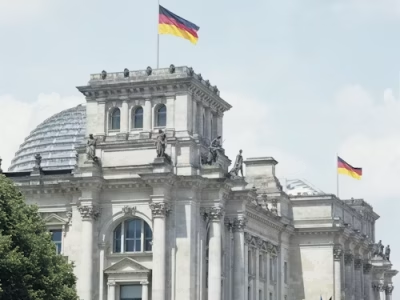
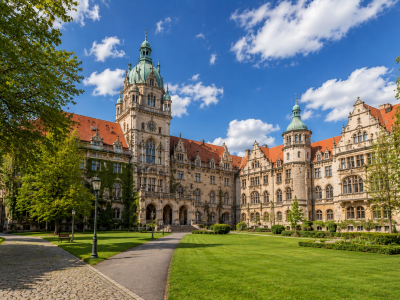
Germany has solidified its status in 2026 as a global academic powerhouse, offering world-class education with little to no tuition fees at public universities. The country’s "Excellence Strategy" continues to fund high-level research clusters, providing international students with cutting-edge facilities and industry-linked curricula. With an 18-month post-study work visa and a focus on English-taught master’s programs, Germany remains a top-tier destination for career-driven scholars seeking high ROI.
Quick Facts
- World-Class Research: 15+ Universities Top 250
- Work Rights: 140 Full Days Yearly
- Post-Study Visa: 18 Months Duration
- Job Opportunity Card: Launched for Professionals
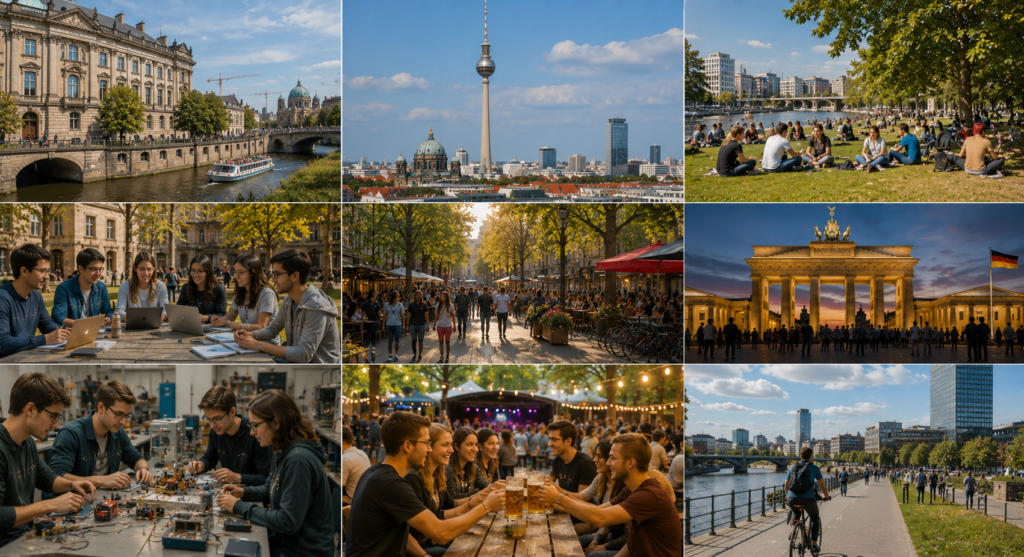
Why Choose Germany for Higher Education?
- Public universities in Germany offer top-tier higher education with completely zero tuition fees for international students.
- The country’s institutions consistently dominate European rankings for engineering, technology, and advanced research.
- Under updated 2026 regulations, international students enjoy expanded work rights of up to 140 full days per year.
- Graduates can access a generous 18-month post-study work visa to secure a career in their field.
- A modernized immigration framework allows fast-tracked pathways to permanent residency for skilled professionals.
- Germany boasts Europe’s strongest economy, providing a vast job market with critical shortages in STEM sectors.
- Most master’s programs are fully taught in English, removing the initial language barrier for global applicants.
- The mandatory blocked account system guarantees that students have secure, regulated funding to comfortably cover living costs.
Tuition and Living
Public universities typically charge €100 to €400 per semester as a contribution fee, while private fees range from €5,000 to €20,000* annually. For 2026, the mandatory blocked account requirement is €11,904 per year (€992/month) to cover essential living costs. Fees shown are indicative only and may vary depending on the institution, course, study level, location, and intake. Please check the university or institution’s official website for the latest fees.
Careers & Industry Insights
The German labor market in 2026 is actively addressing skilled labor shortages through the modernized Skilled Immigration Act and the “Chancenkarte” (Opportunity Card). International graduates are in high demand across the automotive, green energy, and IT sectors, with entry-level engineering salaries often starting between €52,000 and €58,000. The nation’s robust economy and position as Europe’s industrial heart provide a stable environment for long-term career growth and streamlined pathways to permanent residency.
Leading Universities
Technical University of Munich (TUM) and LMU Munich continue to dominate global rankings as premier research hubs in 2026. Other prestigious institutions include Heidelberg University, renowned for medicine, and RWTH Aachen, which remains a world leader in engineering and applied sciences.
Popular Universities in Germany

Technical University of Munich

LMU Munich

Heidelberg University

RWTH Aachen University
Trending Courses
For the 2026 academic cycle, Artificial Intelligence, Data Science, and Renewable Energy are the most sought-after English-taught programs. Mechanical & Automotive Engineering and International Business also remain highly popular due to Germany’s global leadership in manufacturing and its strong network of multinational corporations.