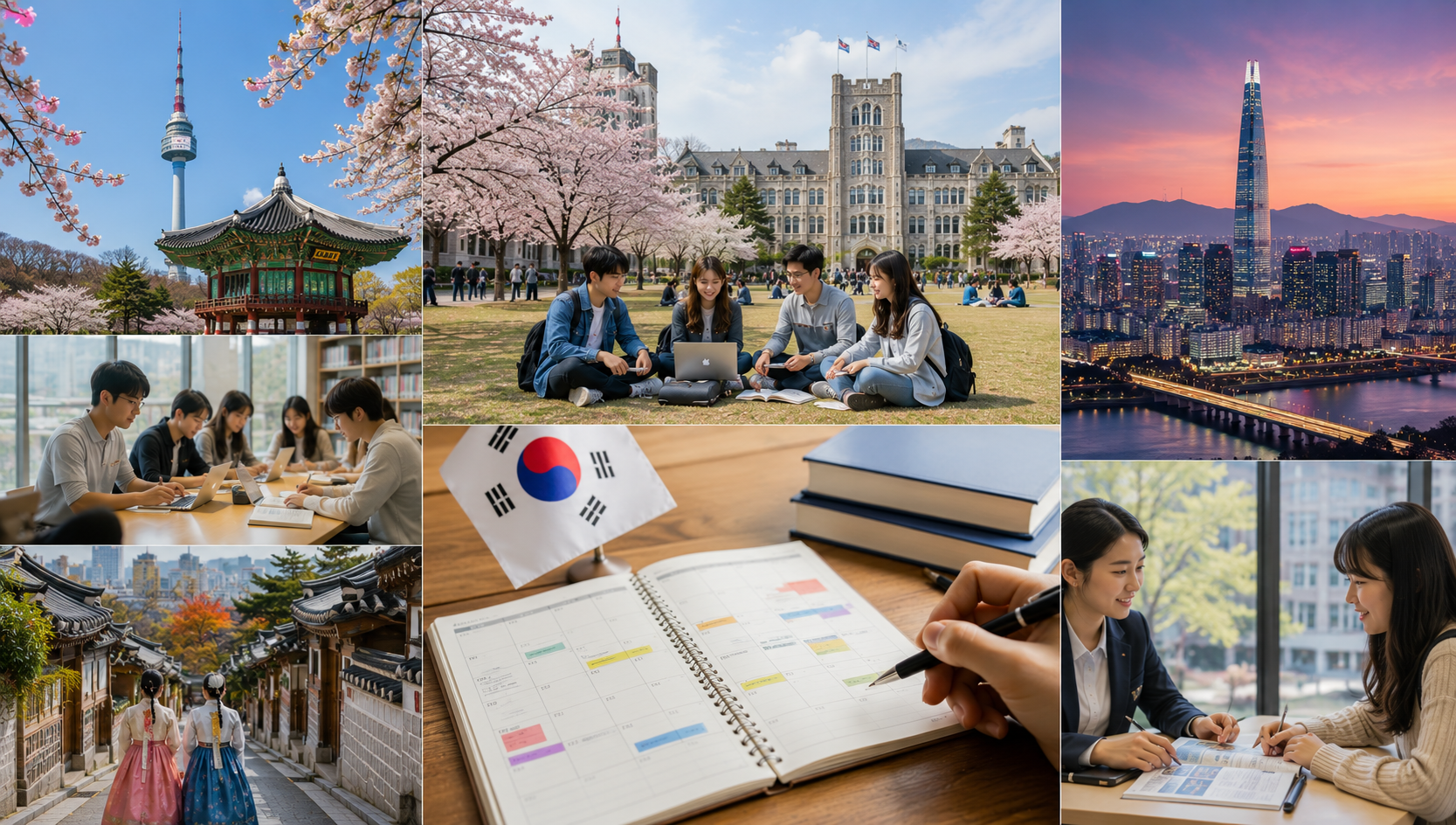
The global landscape of international education is rapidly shifting. While traditional Western destinations are tightening visa rules and raising cost barriers, dynamic Asian nations are stepping into the spotlight. Among them, South Korea stands out as a cultural and academic powerhouse. According to data from the Korean Immigration Service, South Korea hosted over 314,000 international students, proving that the Hallyu wave (Korean Wave) is driving a massive educational boom.
If you are planning to join this thriving academic environment, timing your application perfectly is half the battle won. Most South Korean institutions follow two main intakes for international students: Spring and Fall. Because your choice of intake affects course availability, scholarship options, and your overall preparation timeline, making an informed decision is vital.
This comprehensive guide breaks down the types of intakes in South Korea, their application timelines, and how to choose the right one for your goals.
The Primary Intakes in South Korea
Unlike Western universities that typically start their primary academic year in September, South Korea’s academic calendar aligns uniquely with its seasons.
1. The Spring Intake (The Primary Cycle)
The Spring intake is the major academic cycle in South Korea, aligning perfectly with the official start of the Korean academic year.
- Semester Starts: March
- Application Window: September to November (of the previous year)
- Best For: A comprehensive selection of Bachelor’s and Master’s programs across nearly all top-ranked universities.
Key Benefits of the Spring Intake:
- Maximum Course Availability: Since this is the beginning of the academic year, the majority of departments and specialized majors open their doors to fresh student cohorts.
- Abundant Scholarships: Both government-backed programs—like the prestigious Global Korea Scholarship (GKS)—and university-specific institutional fellowships are highly concentrated in this cycle.
- Social and Cultural Alignment: Arriving in March means you start school alongside domestic freshman cohorts. This makes it significantly easier to join student clubs, attend orientation festivals, and integrate into campus life—all while experiencing Korea’s scenic cherry blossom season!
2. The Fall Intake (The Secondary Cycle)
The Fall intake is the second major entry point, heavily favored by international students who graduate from high school or university during the summer months in their home countries.
- Semester Starts: September
- Application Window: May to June (of the same year)
- Best For: Internationalized programs, English-medium instructions, and specialized STEM tracks.
Key Benefits of the Fall Intake:
- Seamless Academic Continuity: For global students completing their terms between May and July, the Fall intake eliminates an awkward multi-month gap year.
- Targeted Fully Funded Opportunities: While overall intake volume is slightly smaller than Spring, highly specialized fully funded options—such as the specialized KOICA industry convergence scholarships at regional hubs like Daegu University—frequently feature September start dates.
- Less Direct Campus Competition: Because domestic student tracks are already settled, international applicants often find a more streamlined, dedicated orientation process in the autumn.
Step-by-Step Application Timelines
A successful application to a South Korean university requires meticulous organization. From tracking down apostilled academic degrees to clearing language proficiency benchmarks, you must work months in advance.
The typical application roadmap for both intakes follows this timeline:
Spring Intake Timeline (March Start)
| Phase | Timeline | Core Activities |
| Phase 1: Research & Prep | July – August | Research universities; take English (IELTS/TOEFL) or Korean (TOPIK) language proficiency tests. |
| Phase 2: Document Compilation | August – September | Gather transcripts, letters of recommendation, and get documents apostilled or consular-verified. |
| Phase 3: Active Application | September – November | Fill out university portals; submit hard copies of required documents via international courier. |
| Phase 4: Results & Visa | December – February | Receive official acceptance letters; apply for your D-2 Student Visa at the local Korean embassy. |
| Phase 5: Departure | Late February | Fly to South Korea; attend mandatory university orientations. |
Fall Intake Timeline (September Start)
| Phase | Timeline | Core Activities |
| Phase 1: Research & Prep | January – February | Identify target English-taught or Korean-medium programs; finalize language exam scores. |
| Phase 2: Document Compilation | March – April | Arrange financial capability proofs, statement of purpose (SOP), and academic certificates. |
| Phase 3: Active Application | May – June | Submit digital applications; complete university interviews (if applicable). |
| Phase 4: Results & Visa | July – August | Secure your Certificate of Admission (CoA) and complete the student visa issuance process. |
| Phase 5: Departure | Late August | Secure student housing or on-campus dormitories; land in South Korea. |
Crucial Requirements to Keep in Mind
No matter which intake you pick, South Korean admissions officers are strict regarding documentation. Ensure you pay attention to these core pillars:
- Language Proficiency: For English-taught programs, aim for an IELTS score of 5.5 to 6.5 minimum. For Korean-medium instruction programs, a TOPIK (Test of Proficiency in Korean) level 3 or 4 is standard for admission, though some engineering and convergence courses bundle mandatory language training directly into the degree.
- Document Authentication: South Korea demands that your high school diplomas or degree certificates be Apostilled or verified via the Korean Consulate in your home country. This process takes time, so do not leave it to the last minute.
- Explaining Academic Gaps: If you have taken a break between your previous education and your application to South Korea, ensure you prepare a valid narrative or official documentation (like a Gap Certificate) to clear up timelines during the visa assessment phase.
Which Intake Should You Choose?
- Choose Spring (March) if: You want access to the absolute widest variety of courses, want to apply for full government scholarships, and want the true “beginning of the year” university experience.
- Choose Fall (September) if: Your home country’s academic term ends in the summer, you want to avoid a long waiting period, or you are targeting specialized, industry-linked graduate programs taught entirely in English.
Final Thoughts
South Korea represents an incredible blend of cutting-edge tech infrastructure, rich cultural traditions, and high-return career prospects. By matching your profile to the right intake and acting early on document compilation, you can turn your dream of studying in Seoul, Busan, or Daegu into reality.
Unsure about apostille processes, visa tracking, or choosing between English-medium or Korean-taught majors? Reach out to an experienced overseas education consultant to map out your South Korean academic journey smoothly!
Comments are closed